Two of the most ancient breeds in the world.
The Saluki and the Afghan Hound aren't a recent trend. Their history is measured in millennia — ours, by that scale, has only just begun.
Breeding these dogs means accepting responsibility for their rarity. In Canada, annual registrations of the Saluki and the Afghan Hound are counted in the dozens, not the thousands. Every litter we produce matters to the preservation of the bloodline — we never lose sight of that.
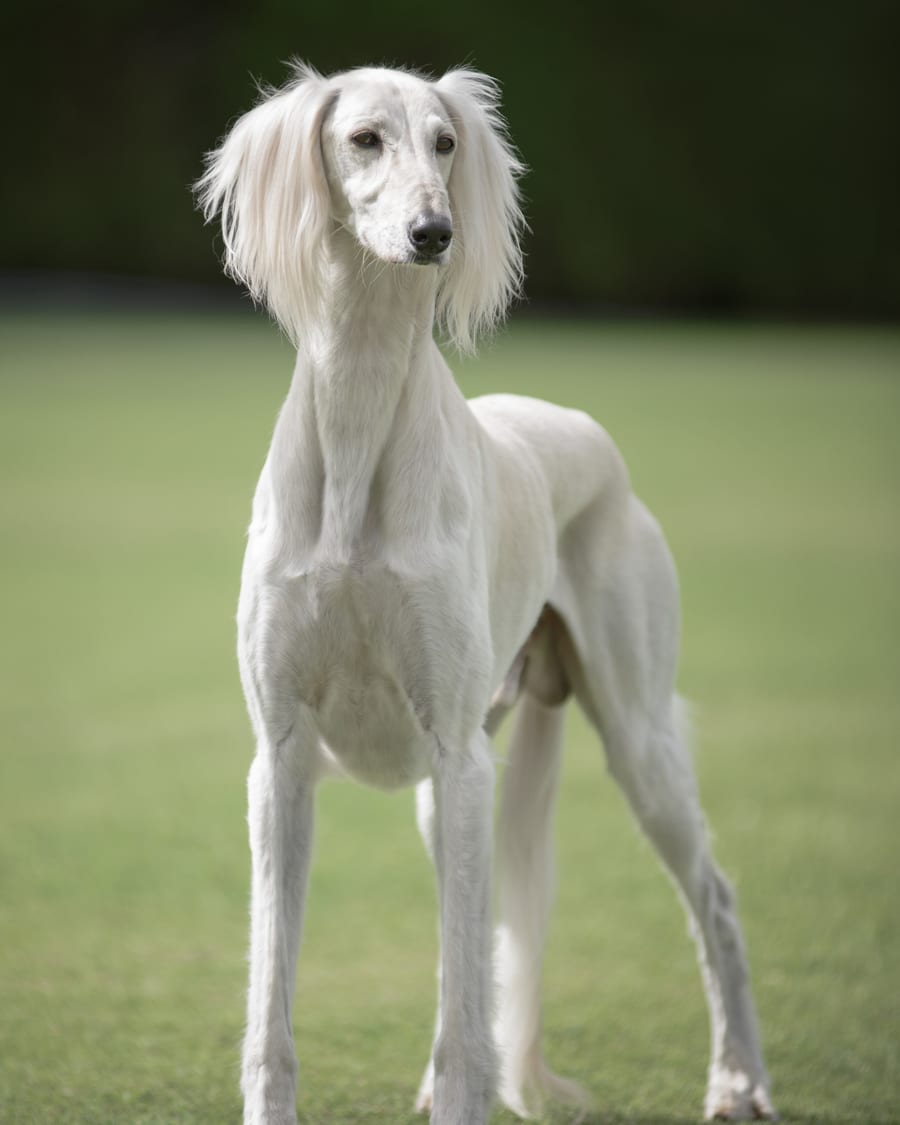
The silent hunter of the Bedouin tribes.
The Saluki ranks among the oldest known domesticated breeds: figures resembling it adorn Egyptian and Mesopotamian artifacts several millennia old. It was nicknamed "the royal dog of Egypt," sometimes found mummified alongside its owners.
Selected by Bedouin tribes across the Arabian Peninsula, Persia and the Fertile Crescent to hunt gazelle and hare by sight, at top speeds approaching 65 to 70 km/h, the Saluki was traditionally never sold — only given, between tribal leaders or to honoured guests. A custom that still shapes how carefully the breed is placed today.
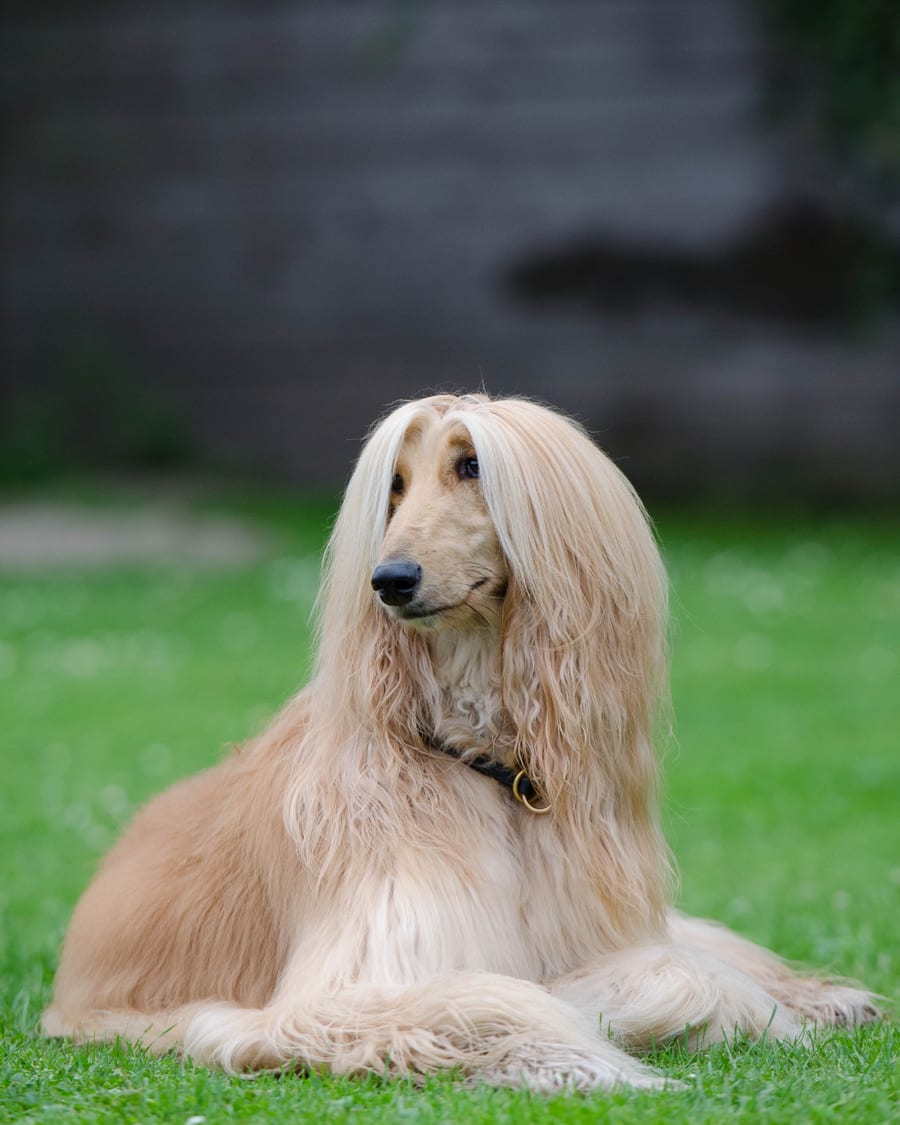
The sovereign silhouette of the Central Asian mountains.
Native to the mountainous regions of Afghanistan and Central Asia, the Afghan Hound developed a long, dense, silky coat as protection against the harsh cold of the highlands. Its build — broad pads, powerful joints — let it hunt by sight across rocky terrain where speed alone wasn't enough.
Kept relatively isolated from the rest of the world for centuries, it was introduced to the West in the early twentieth century by British officers and travellers. Its singular bearing, almost unreal in motion, quickly made it a fixture of the show ring and, later, a recurring symbol in high fashion.
From antiquity to Outremont.
Antiquity
Figures resembling the Saluki adorn Egyptian and Mesopotamian artifacts several millennia old — one of the very first breeds shaped by deliberate human selection.
Caravan routes
The Saluki travelled with nomadic tribes of the Middle East, the Afghan Hound with those of the Central Asian mountains — each selected purely for hunting effectiveness, never for looks alone.
Arrival in the West
Early twentieth century: the first dogs cross into Europe and then North America, sparking fascination with a bearing the West had never quite seen before.
Noblesse Canine, today
A house in Outremont carries on, at its own scale and with the same rigour as the original breeders, the preservation of these two ancient bloodlines.
Rare bloodlines deserve equally rigorous selection.
Browse our currently available puppies, or write to us to discuss a future litter.